
 Italiano
 Español
 Français
 Deutsch
 Nederlands
 Polski
 Português
 Português do Brasil
 Pусский
 日本語
日本語 한국어
한국어 Bahasa Indonesia
Sightseeing Tours in Rome: Colosseum, Vatican and Beyond
Sightseeing Tours in Rome: Beyond the Colosseum
Rome on Two Wheels, Four Wheels, or None at All
Most people who visit Rome end up doing the same loop: Colosseum, Trevi Fountain, Spanish Steps, Vatican. There is nothing wrong with that route, but the city has so much more packed into its side streets, hilltop neighborhoods, and hidden piazzas that a standard walking tour barely scratches the surface. That is exactly why a sightseeing tour in Rome works best when you pick a format that actually matches how you want to experience the city.
A Vespa tour lets you cover ground quickly without being stuck behind a bus window. You ride through Trastevere, cut across the Aventine Hill, and stop wherever the guide decides the light is good or the crowd is thin. If you would rather not drive yourself, Fiat 500 tours put you in the passenger seat of an iconic Italian car with a local behind the wheel. It is the kind of thing that sounds gimmicky until you are actually rolling past the Circus Maximus with the roof down. Golf cart tours fill a similar role for anyone who wants to sit back and let someone else navigate Rome's narrow lanes, especially useful if mobility is a concern or you are traveling with small children.
What Happens to Rome After Dark
Rome during the day and Rome at night are practically two different cities. The light changes everything. The Colosseum, lit up in warm gold against a dark sky, looks nothing like the sunbaked version you see at noon. The Forum becomes quieter, almost eerie. Piazza Navona empties out enough that you can actually hear the fountains. A night tour gives you all of this without the midday heat or the shoulder-to-shoulder crowds that pack every major landmark from April through October.
Several of these evening experiences pair the walk with food. You might stop for pizza al taglio at a neighborhood spot the guide knows personally, or end the night with gelato from a place that has been open since before most of us were born. The combination of food and sightseeing after sunset hits differently than a daytime museum crawl. You are relaxed, the temperature has dropped, and Rome feels like it belongs to you for a few hours.
Photo Shoots and the Art of Looking Good in Front of Old Things
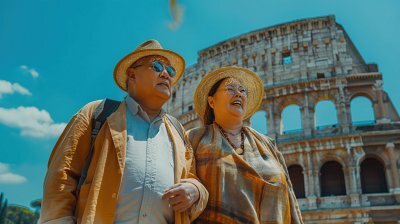
One of the more unusual options in this category is a professional photo shoot at Roman landmarks. A photographer meets you at a spot like the Colosseum or Piazza del Popolo early in the morning, before the tourist wave arrives, and spends an hour or two capturing portraits with the city as your backdrop. Couples book these for anniversaries or proposals, but solo travelers and families do it too. The results are genuinely impressive because the photographer knows exactly where to stand and when the light cooperates. It is a different kind of sightseeing tour — Rome becomes your studio instead of your classroom.
Colosseum Tours: Arena Floor, Underground, and the Parts Most People Miss
If the Colosseum is the reason you are here, the standard ticket gets you through the door but not much further. A Colosseum tour with arena floor access puts you at the center of the amphitheater, standing where gladiators actually fought. The perspective from ground level is completely different from the upper tiers. You can see the underground tunnels through the wooden floor sections, and the scale of the place hits you in a way it simply does not from the regular walkways.
The underground Colosseum tour goes a step further. You descend into the hypogeum, the network of corridors and chambers beneath the arena where animals were kept in cages and fighters waited for their turn. These passages were hidden from the audience above, and walking through them now still carries a certain weight. Guides in these smaller groups tend to be archaeologists or historians who know the building well enough to point out details — tool marks on the stone, drainage channels, mechanical lift shafts — that you would walk right past on your own. For anyone serious about Roman history, this is the colosseum tour worth prioritizing.
Practical Notes: Timing, Combinations, and What Actually Works
Rome is not a city that rewards rushing. A half-day tour works well if you want to focus on one area — say, the Colosseum and the Forum in the morning, or Trastevere and the Jewish Ghetto in the afternoon. Full-day tours try to cover more ground, and they can be worthwhile if your schedule is tight, but expect to be tired by hour six. Kids tours keep the pace slower and the stories more engaging for younger travelers, which makes a real difference when you are dragging an eight-year-old through ancient ruins.
The best season for a sightseeing tour in Rome depends on your tolerance for heat. July and August are brutal — 35 degrees, no shade at the Forum, and long lines everywhere. Late September through November and then again from March through May give you mild weather, fewer crowds, and better prices on most experiences. If you are booking a colosseum tour specifically, morning slots sell out weeks in advance during peak season, so plan accordingly.
Combining experiences is often smarter than booking everything separately. A walking tour that includes Colosseum underground access plus the Palatine Hill saves you the hassle of coordinating multiple tickets and guides. Some packages add in a food stop or a gelato tasting, which breaks up the history with something your stomach will appreciate. Whatever combination you choose, the goal is the same: see Rome the way it actually is, not just the way it looks on a postcard.