
 Italiano
 Español
 Français
 Deutsch
 Nederlands
 Polski
 Português
 Português do Brasil
 Pусский
 日本語
日本語 한국어
한국어 Bahasa Indonesia
Bike Tours and E-Bike Experiences in Rome
Bike Tours and E-Bike Experiences in Rome
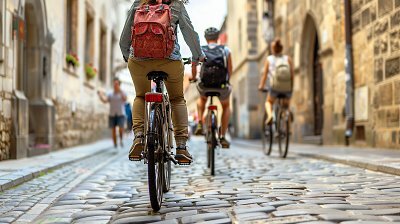
Why Two Wheels Beat Two Feet in Rome
Rome is a big city. Bigger than most people expect when they first arrive and try to walk from the Colosseum to the Vatican in one afternoon. On foot, you can realistically cover two or three major sites in a day before your legs give out and you end up sitting at a cafe for the rest of the evening. On a bike, you can cover five times the ground and actually get a feel for how the city connects. The backstreets between Trastevere and the Circus Maximus, the quiet stretch along the Tiber near Isola Tiberina, the residential blocks behind the Pantheon where laundry hangs from windows and nobody is selling selfie sticks. Those are the parts of Rome that make the city worth knowing, and you will not reach them on a standard walking tour.
Biking also changes your relationship with the city's layout. Rome was not built on a grid. Streets curve, dead-end into piazzas, and shoot off at odd angles. When you are on a bike, those unexpected turns become fun rather than frustrating. You roll past something interesting, loop back, and stop. There is a freedom to it that buses and walking tours simply cannot match.
E-Bikes and the Seven Hills Problem
Here is the thing about Rome that nobody warns you about: the hills are real. The famous seven hills are not gentle slopes. The Capitoline Hill is short but steep. The Aventine will test your calves. And the roads between major landmarks often climb in ways that are not obvious on a map. This is exactly why e-bikes have become so popular for touring Rome. The pedal assist takes the edge off the inclines without turning the ride into a motorcycle experience. You are still pedaling, still feeling the road, but you are not arriving at the Trevi Fountain drenched in sweat.
E-bikes also level the playing field for groups. If you are traveling with someone who bikes regularly and someone who hasn't been on a bike in years, the electric assist means everyone can keep up. Nobody gets left behind on a climb, and nobody has to slow down on the flats. For families or mixed-fitness groups, this matters a lot.
Different Tours for Different Interests
Not all bike tours in Rome follow the same route or have the same focus. Some are built around food. The Rome E-Bike Street Food and Market Tour, for example, takes you through neighborhoods where you stop at local markets, try supplì and porchetta, and eat your way through areas that most tourists never visit. The food stops are not afterthoughts. They are the whole point, with the biking connecting them.
Then there are the early morning options. A sunrise e-bike tour gets you out before the crowds and the heat. You ride through empty streets, past monuments that are normally surrounded by tour groups, and the light at that hour makes everything look different. Roman ruins at 6:30 in the morning, with golden light and no crowds, is a genuinely different experience from seeing them at midday. Some of these tours include an Italian breakfast stop with espresso and cornetti at a neighborhood bar where the barista knows every regular by name.
For those interested in history and sacred sites, there are tours that focus on Rome's churches, relics, and Jubilee landmarks. These tend to cover more ground and include stops that most visitors skip entirely. Small group tours keep numbers to ten or twelve riders, which means the guide can actually talk to you rather than shouting over a crowd. The pacing is better, the stops are longer, and you can ask questions without holding up forty people.
Where You Actually Ride
Most bike tours in Rome stick to a mix of bike lanes, quiet side streets, and pedestrian zones. You will ride along the Tiber river path, which is flat and separated from car traffic. You will cut through piazzas like Campo de' Fiori and Piazza Navona during quieter hours. Some routes take you past the Circus Maximus, where the old chariot racing track is now a long grassy park that is perfect for cycling. Others head into Trastevere, where the narrow cobblestone streets force you to slow down and look around.
Roman traffic has a reputation, and it is not entirely undeserved. But the areas where bike tours operate are chosen specifically to avoid the worst of it. Guides know which streets are calm at which times. You will not be dodging buses on the Via del Corso. That said, you will share some roads with scooters and the occasional delivery van. It is Rome, after all. The guides handle intersections and keep the group together.
Practical Things Worth Knowing
Wear comfortable clothes and closed-toe shoes. Sandals on pedals are a bad idea, especially on cobblestones where you might need to put a foot down quickly. Helmets are provided on all tours and are strongly recommended, though Italian law does not require them for adults. Bring a water bottle or buy one before the tour starts. Rome has public drinking fountains everywhere, the nasoni, and your guide will point them out along the route, but having water from the start makes a difference in summer.
If you have not ridden a bike recently, do not worry too much. The e-bikes are easy to handle, and guides typically do a short test ride before heading out. Most tours cover between 15 and 25 kilometers, which sounds like a lot but feels manageable with electric assist and frequent stops. The pace is relaxed. This is not a cycling workout. It is a way to see the city while someone who knows it well shows you where to look and what to taste.
Morning tours, especially the sunrise ones, are the best choice during summer months when afternoon temperatures push past 35 degrees. In spring and autumn, any time of day works well. Winter tours run too, and Rome in December or January is cool but rarely cold enough to make cycling unpleasant. The streets are emptier, the light is soft, and you can actually hear the fountains.